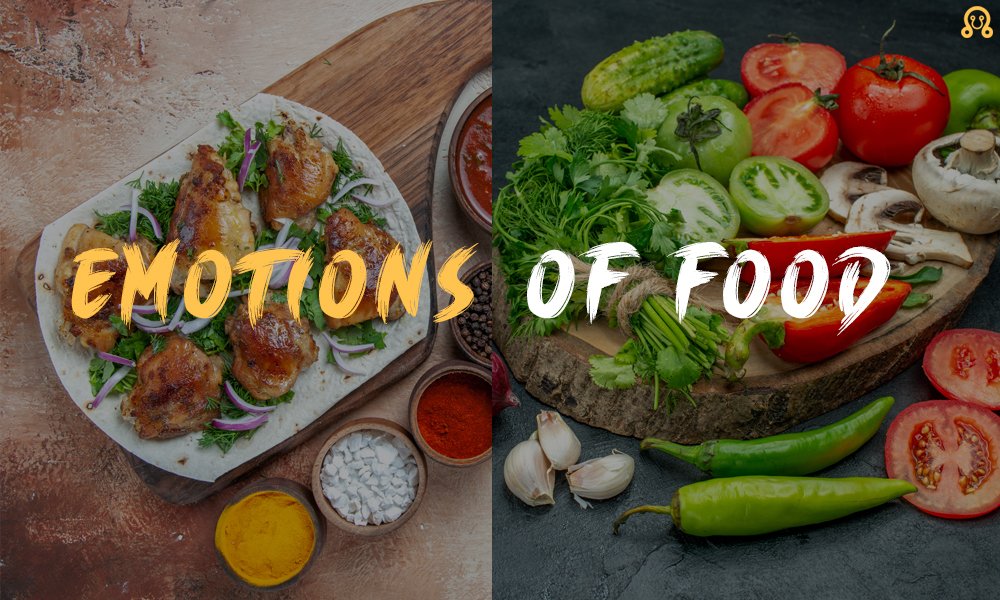
EMOTIONS OF FOOD
Veg or Non-Veg: What Are We Really Consuming?
Vegetarian or non-vegetarian?
It is one of those questions that can be debated endlessly.
But perhaps we are asking the wrong question.
Instead of looking only at the source of food, we may also need to ask a deeper question:
What does the food carry with it?
Food certainly gives us proteins, carbohydrates, fats, minerals and other nutrients. But human experience of food has never been limited to chemistry alone. How food is grown, obtained, prepared, served and consumed also becomes part of our relationship with it.
At a subtler level, I believe two considerations deserve particular attention:
Food Is More Than Its Source
Plants are living organisms. They respond continuously to light, touch, temperature, injury and changes in their environment.
This does not mean that plant responses should automatically be equated with human or animal emotions. But it does remind us of something important: our food comes from life.
Therefore, the distinction between vegetarian and non-vegetarian food cannot, by itself, answer every ethical, physical or spiritual question related to eating.
How food reaches our plate also matters.
Was it cultivated responsibly?
Was unnecessary suffering involved?
Was it prepared with care or merely processed for convenience?
What was its quality and freshness?
And finally, in what state of mind are we consuming it?
These questions take us beyond labels.
The Emotion Around Food
Think of something very simple.
A meal prepared at home by someone who genuinely cares for you often feels different from an identical-looking meal prepared mechanically.
Chemically, the difference may not always be dramatic.
Experientially, it can be.
There is attention in one. There may be affection, patience and intention behind it.
That is why food in many traditional cultures has never been treated merely as fuel. The person preparing it, the manner in which it is prepared, the environment in which it is eaten and the mental state of the person eating it have all been considered significant.
This is what I mean when I speak about the “emotions of food.”
Not that every vegetable or grain literally stores human emotions in a scientifically measurable form, but that food reaches us through a chain of life, action, intention and experience.
And that chain deserves our awareness.
Resistance, Suffering and Conscious Choice
The ethical distinction becomes sharper when an animal is killed for food.
Animals possess developed nervous systems and show clear behavioural responses to fear, stress and threat. For someone thinking about food at a subtler level, the conditions under which an animal is raised and killed therefore become relevant considerations.
This does not require condemning everyone who consumes animal-based food.
Diet is influenced by geography, health, availability, culture, family tradition, physiology and personal belief.
Someone living in one part of the world may have very different dietary realities from someone living elsewhere.
The purpose of awareness is not judgement.
The purpose is to make the choice consciously.
The “Software” of Food
Here I use the word software as a metaphor.
Every living organism has its own biological organisation, structure and behavioural nature. Plants function differently from animals. Animals function differently from human beings.
Similarly, different foods interact differently with the human body.
But food also affects our lived experience.
Some foods leave us light and comfortable. Others make us heavy or restless. Some suit one person perfectly and disturb another. Quantity, timing, preparation and individual constitution can change the experience completely.
So instead of asking only:
“Is this vegetarian or non-vegetarian?”
we might also ask:
“What is this food doing to me?”
Does it support my health?
Does it suit my digestion?
How do I feel after eating it regularly?
Does it support the kind of physical and mental life I am trying to build?
This is the interaction between the software of the food and the software of the eater.
Whatever You Consume Becomes Part of You
Food deserves particular attention because it literally becomes part of the physical material from which the body maintains itself.
But the principle extends much further.
We are influenced not only by what we eat.
We are also influenced by what we repeatedly watch, hear, read, think and emotionally absorb.
A person consuming anger throughout the day through conversations, media and thoughts cannot compensate merely by eating a perfectly vegetarian dinner.
Similarly, a particular dietary label by itself does not automatically make someone peaceful, compassionate or spiritually evolved.
Inner refinement requires more than a menu.
Food is one component of a much larger ecology of consciousness.
Your Life, Your Decision
There may therefore be no single dietary formula appropriate for every human being in every circumstance.
Your choice may reasonably depend upon your health, region, availability of food, family circumstances, medical advice, digestive capacity, beliefs, age and personal goals.
But whatever you choose, choose with awareness.
Look beyond the label.
Consider nutritional value.
Consider long-term health.
Consider the manner in which the food reaches you.
Consider moderation.
Consider your own physical and mental response to it.
And, where possible, reduce unnecessary harm.
The objective should not be to win the argument of vegetarian versus non-vegetarian.
The more meaningful objective is to develop enough awareness to understand:
What am I consuming, why am I consuming it, and what is it gradually making of me?
Because ultimately, we are shaped not only by our food.
We are shaped by everything we repeatedly allow to enter our body, mind and consciousness.
Choose consciously. Eat gratefully. Live mindfully.